Home ImprovementJune 14, 2026
Quartz and granite are both premium countertop materials — but Colorado's climate, water hardness, and lifestyle make one a smarter choice for most Thornton kitchens. Here's the honest breakdown before you commit.
You've finally decided to remodel your kitchen. The cabinets are picked, the layout is set, and then you hit the moment that stops almost every project dead in its tracks: quartz or granite?
Both look incredible in the showroom. Both carry a premium price tag that signals quality. Both will outlast your mortgage if properly maintained. So why does choosing between them feel so complicated?
Because most of the advice you'll find online was written for a generic homeowner in a generic climate. It doesn't account for the dry Colorado air, the hard Front Range water, or the reality of daily life in a Thornton household where the kitchen is genuinely the center of the home.
This is the breakdown we give every homeowner who walks through our door — no showroom bias, no upsell, just the information you need to make the right call for your specific situation.
Before getting into the Colorado-specific factors, it helps to understand what these two materials fundamentally are.
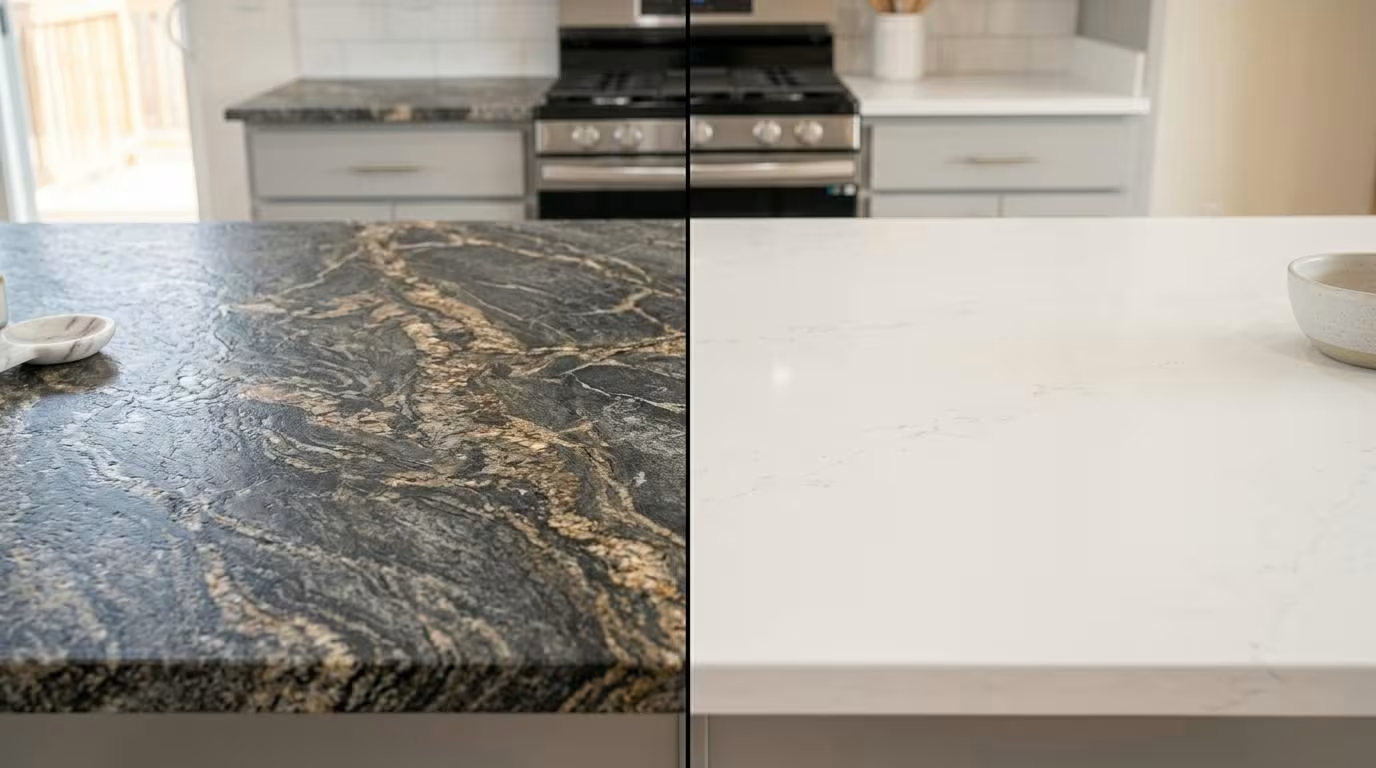
Granite is a natural igneous rock quarried directly from the earth. Every slab is unique — the veining, color variation, and pattern are one-of-a-kind, formed over millions of years. It is cut, polished, and sealed before installation. No two granite kitchens look exactly alike, which is part of the appeal.
Quartz countertops — brands like Caesarstone, Silestone, and Cambria are common in our market — are engineered stone. They are made from approximately 90 to 95 percent crushed natural quartz combined with polymer resins and pigments. The result is a consistent, non-porous surface that is manufactured to precise specifications.
Understanding this distinction explains almost every practical difference between the two materials.
This is the part that most national comparison guides miss entirely, and it matters more than almost any other factor for Thornton homeowners.
Colorado's average relative humidity sits between 30 and 40 percent — significantly lower than the national average. This extreme dryness affects natural stone in a way that doesn't get enough attention: it accelerates the rate at which granite's sealant breaks down.
Granite is a porous material. It requires resealing every one to three years to stay stain-resistant and food-safe. In humid climates, this timeline is forgiving. In Colorado's dry conditions, sealant deteriorates faster, which means Thornton homeowners typically need to reseal on the shorter end of that range — or risk staining from everyday cooking oils, wine, and acidic foods.
Quartz, being non-porous by nature, requires no sealing at all. Ever.
The Front Range has notoriously hard water — high in calcium and magnesium minerals that leave deposits on surfaces over time. On granite, hard water spots can etch into the surface if the sealant is worn, creating dull patches that require professional refinishing. On quartz, hard water buildup wipes off cleanly without damaging the surface.
If you've ever had to scrub white mineral deposits off your faucets, multiply that problem across your entire countertop surface and you'll understand why this matters.
Colorado sees dramatic temperature swings between seasons — and even within a single day. Granite handles temperature variation well and is highly heat-resistant; you can set a hot pan directly on it without damage. Quartz, by contrast, is more sensitive to direct heat. The polymer resins in engineered quartz can discolor or crack under sustained high heat, so trivets and hot pads are non-negotiable.
If you cook heavily and hate the habit of reaching for a trivet, this is a real consideration.
Here is how these two materials compare across the factors that matter most in a Thornton kitchen.
Maintenance in Colorado's climate: Quartz wins. No sealing required, resists hard water deposits, and holds up in dry conditions without the annual upkeep that granite demands.
Heat resistance: Granite wins. You can set a cast iron pan directly on granite without concern. Quartz requires trivets for anything above moderate heat.
Appearance variety: Granite wins for uniqueness. Every slab is one-of-a-kind. Quartz wins for consistency — if you need two slabs to cover a large kitchen, they will match perfectly. Granite slabs from the same lot can have noticeable variation.
Durability against chips and cracks: Roughly equal. Both are hard surfaces. Granite is slightly more prone to chipping at edges and corners. Quartz is slightly more prone to cracking under a very focused impact, like dropping a heavy cast iron pot directly on a seam.
Resale value in Thornton: Both perform well. The 2024 Remodeling Magazine Cost vs. Value Report for the Mountain Region shows premium countertop installations consistently returning strong value at resale. Buyers in our market recognize both materials as quality upgrades.
Cost range in Adams County: Both materials typically run between $65 and $130 per square foot installed, including fabrication and labor. Exotic granite varieties and premium quartz brands like Cambria can push above that range. Budget quartz from lesser-known manufacturers can come in lower — but we generally caution against it, as consistency and warranty coverage vary significantly.
After years of installing both materials across Thornton's neighborhoods — from Todd Creek estates to Hunter's Glen cottages — here is the honest shortcut:
Choose quartz if you want a truly low-maintenance surface, you have young kids, you cook frequently with acidic ingredients, or you want a consistent look across a large kitchen. The Colorado climate works against granite's maintenance requirements in ways that add up over time.
Choose granite if you want a genuinely unique slab that no other kitchen will replicate, you do a lot of high-heat cooking and dislike the trivet habit, or you are drawn to the natural variation of real stone and willing to maintain it properly.
There is no wrong answer here — only the answer that fits how you actually live in your kitchen.
Regardless of which direction you go, ask your countertop installer these questions before signing anything:
What is the origin of this slab, and can I see the full slab before fabrication? With granite especially, samples in a showroom can look very different from the full slab once it is cut.
What is the warranty on fabrication and installation? Reputable installers in the Thornton market back their seams and edge work with a minimum one-year workmanship warranty.
For granite: what sealant product do you use, and what is the recommended resealing schedule for Colorado's climate? A good fabricator will have a specific answer, not a generic one.
For quartz: is this brand's resin formulation rated for kitchen environments? Some lower-cost engineered quartz products are designed for bathroom vanities and carry different heat and UV ratings than kitchen-grade material.
Both quartz and granite will make your Thornton kitchen look and function at a level that justifies the investment. But in Colorado's specific climate — dry air, hard water, temperature extremes — quartz requires significantly less long-term maintenance and holds up more predictably year over year.
If you are planning a kitchen remodel and want to see both materials in the context of a full design, our team at Thornton Remodeling works with premium fabricators in the Denver metro and can walk you through slab selection, edge profiles, and installation as part of your project scope. The countertop decision becomes a lot easier when you can see it in the context of your actual cabinets and flooring.
Your kitchen deserves a surface that works as hard as you do — and keeps looking good while it does it.
“The details are not the details. They make the design.”— Alina Cortez
Have questions about your remodeling project? Get a free assessment from our experts.