Home ImprovementJune 14, 2026
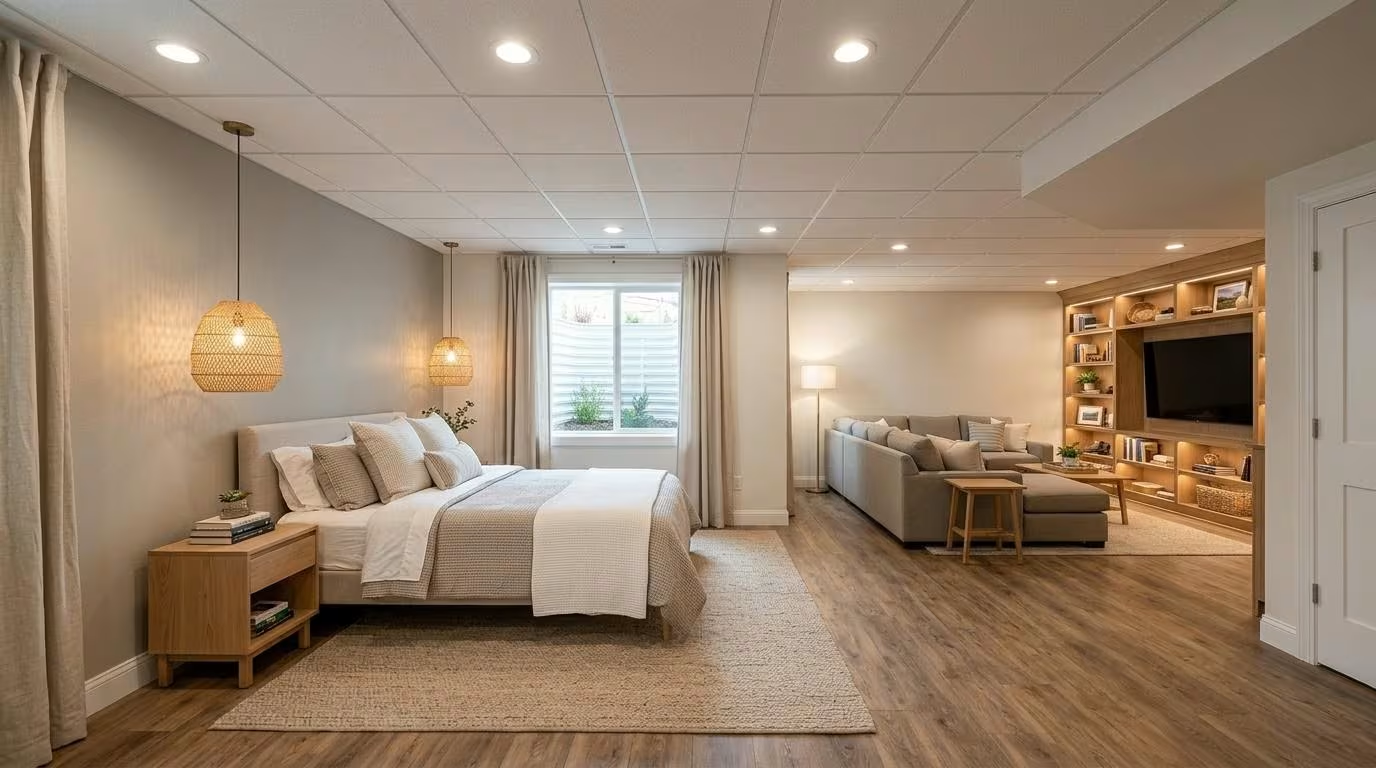
Most Thornton homeowners are paying property taxes on hundreds of square feet they never use. Here is what it actually costs to finish a basement in Adams County, what Colorado's building codes require, and how to do it without the moisture problems that plague half the finished basements in this zip code.
Here is a number worth sitting with: the average unfinished basement in a Thornton home built between 1988 and 2005 is somewhere between 800 and 1,200 square feet. You are paying property taxes on every inch of it. You are heating it in the winter whether you use it or not. You are running the dehumidifier down there every summer because the alternative is worse.
And what is that space actually doing for you? Storing holiday decorations, old furniture, and cardboard boxes that haven't been opened since the last move.
Basement finishing is the one renovation category where the math is almost always unambiguous. You are not adding square footage — it already exists. You are converting square footage that generates zero value into square footage that functions as a bedroom, a home office, a rec room, a home theater, or a full guest suite with its own bathroom. The cost per finished square foot in a basement is consistently lower than any above-grade addition, and the impact on both daily use and appraised value is immediate.
For Thornton homeowners specifically, this is one of the highest-leverage investments available — and one of the most consistently underdone.
Before getting into design possibilities and cost ranges, there is a conversation that needs to happen about why so many finished basements in northern Adams County fail within five to ten years of completion — and what separates a basement that lasts from one that doesn't.
Colorado's climate creates a specific set of challenges for below-grade living spaces that contractors from other regions often underestimate. The problem is not moisture in the way most homeowners picture it — a visible leak or standing water. It is vapor transmission.
The Front Range sits at high altitude with low humidity above ground. Below ground, soil moisture is constantly present and constantly moving. In a basement with inadequate vapor barriers and improperly specified insulation, moisture migrates through the foundation walls and concrete slab slowly and invisibly — until it reaches the warm interior air on the finished side and condenses. The result is mold inside wall cavities, rot behind drywall, and flooring failures that don't become visible until significant damage has already occurred.
Colorado also experiences dramatic freeze-thaw cycles across the seasons. Foundation walls expand and contract. Improperly sealed penetrations — where pipes, electrical conduits, and HVAC lines pass through the foundation — allow both moisture and cold air infiltration that undermines the entire thermal performance of the finished space.
A properly finished basement in Thornton starts with a vapor barrier system applied directly to the foundation walls and slab before any framing, insulation, or drywall begins. This is not optional, and it is not something that can be retrofitted economically after the fact. It is the foundation — in every sense — of a basement that performs well for twenty or thirty years.
The City of Thornton Building Division has specific requirements for basement finishing that every homeowner should understand before signing a contract. A contractor who doesn't raise these topics proactively in the early conversation is worth scrutinizing carefully.
Any basement room classified as a bedroom under Colorado building code requires an egress window — a window large enough to serve as an emergency exit. The International Residential Code, which Thornton adopts with local amendments, specifies minimum dimensions: at least 5.7 square feet of net clear opening, with a minimum width of 20 inches and minimum height of 24 inches, with the sill no more than 44 inches above the finished floor.
Egress window installation in a Thornton basement is a structural project. It involves cutting through the foundation wall, excavating a window well on the exterior, installing drainage at the base of the well, and framing the opening properly. Done correctly, it is a clean, permanent improvement that also adds meaningful natural light to the finished space. Done incorrectly — and there are contractors in this market who cut corners on egress window installation — it creates a water infiltration point that can damage the entire finished basement.
If you want to build a legal bedroom suite in your basement, budget for egress window installation as a line item. It typically runs $3,000 to $6,000 per window installed correctly in Adams County, including excavation and well installation.
All electrical work in a finished basement requires a permit and inspection by the City of Thornton. This covers outlet placement, circuit capacity for bedroom and home theater loads, recessed lighting installation, and any panel upgrades required to support the additional circuits. Homes built before 2000 in Thornton frequently have panels that are at or near capacity — a basement finish often triggers a panel evaluation that should happen before framing begins, not as a surprise mid-project.
Colorado code requires a minimum ceiling height of seven feet in habitable basement spaces. Many Thornton basements — particularly those with older HVAC trunks running along the ceiling — have existing clearances that require careful evaluation before framing begins. If your basement ceiling is running close to that threshold, the choice between a drop ceiling and open-joist ceiling becomes a code compliance question, not just an aesthetic one.
This is where the conversation gets interesting, because the answer for most Thornton basements is: more than you think.
The basement is the ideal location for a dedicated home theater, and Thornton homes have the square footage to do it properly. A well-designed theater space includes custom framing for a projector recess or large-format screen wall, soundproof insulation between the theater space and adjacent rooms — critical if you have kids who go to bed before your movie ends — recessed surround-sound wiring in the walls and ceiling before drywall goes up, and dimmable smart lighting zones that shift from ambient to cinema mode.
The key to a home theater that actually works is planning the wiring infrastructure before any wall or ceiling surface is closed. Retrofitting speaker wire and HDMI runs through finished walls is expensive and messy. Running conduit during the rough-in phase costs almost nothing and future-proofs the space for technology changes over the next decade.
Adding a legal bedroom and bathroom to your basement converts it from a rec space into a functional guest suite — or a space that a multigenerational family can actually use as a semi-independent living area. This scope requires an egress window in the bedroom, a properly permitted bathroom with full plumbing rough-in, and sufficient ceiling height throughout.
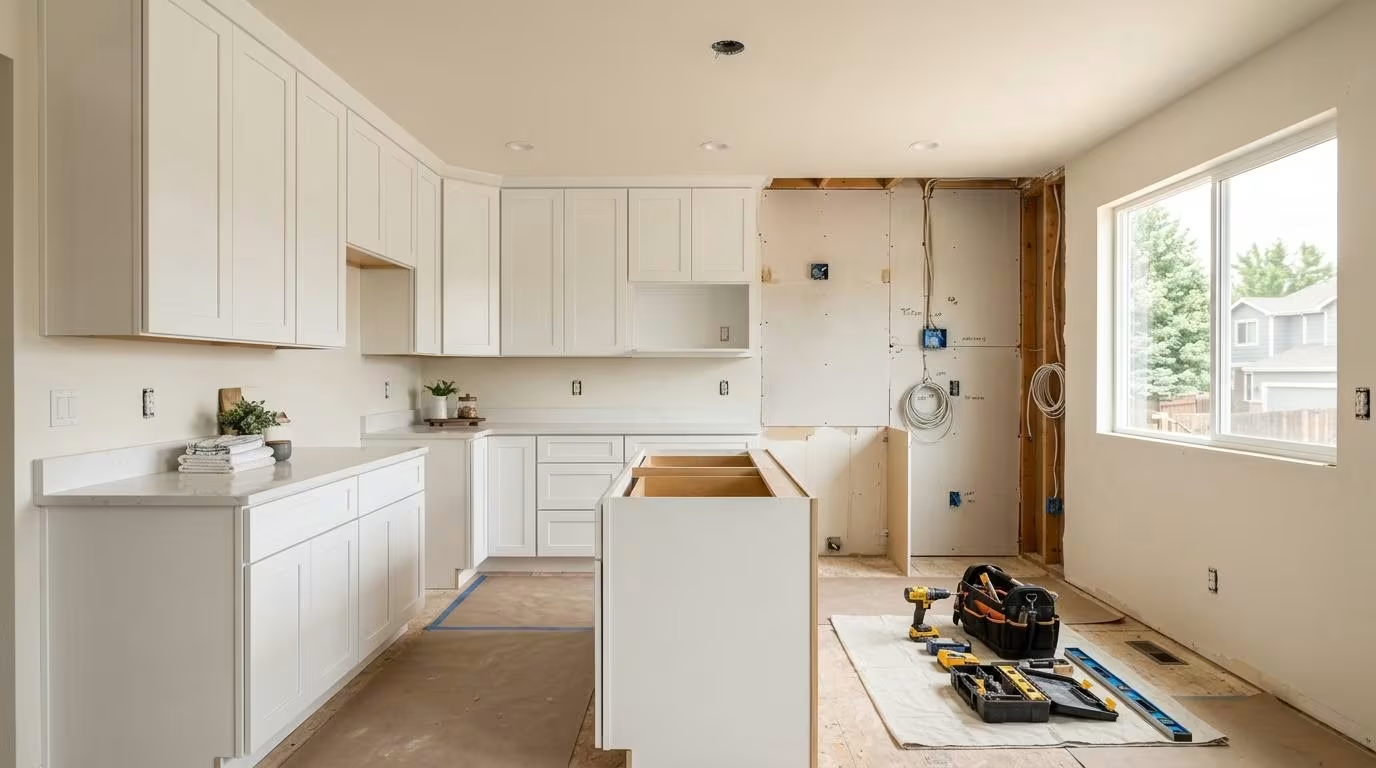
A basement bathroom is one of the more technically demanding elements of a basement finish because it requires breaking the concrete slab to rough in drain lines below grade. This is standard work for an experienced crew — the slab is cut, drains are set at proper slope, and the concrete is repoured. But it is work that absolutely requires a licensed plumber and a permit, and it needs to happen before any framing or flooring goes in.
For remote workers — and Thornton has a high concentration of them — a dedicated home office in a finished basement solves a problem that working from a bedroom or living room never quite does: genuine separation between work and home life. A basement office with proper egress, climate control, and acoustic separation from the main living areas is a different category of workspace than a desk in the corner of a bedroom.
A dedicated gym space in the basement eliminates the gym membership math entirely for many families. Rubber flooring over the slab, proper ventilation, reinforced ceiling framing for a pull-up bar or suspension trainer, and a mirrored wall are the key specifications. Budget for a dedicated circuit for cardio equipment — treadmills and rowing machines draw significant amperage under load.
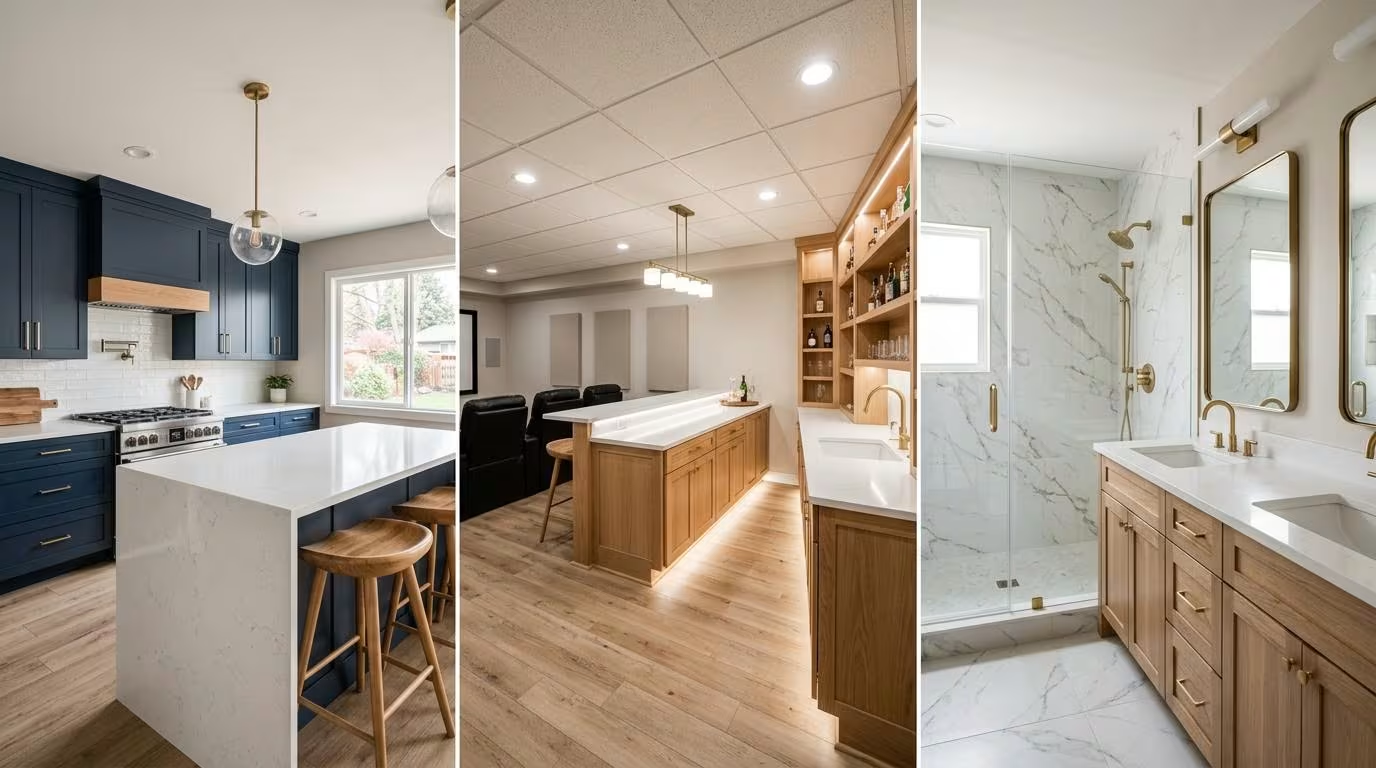
A custom wet bar — with under-counter refrigeration, a small sink, custom cabinetry, and a quartz countertop — transforms a finished basement from a space people occasionally visit into the room where the actual entertaining happens. In Thornton's family-oriented neighborhoods, a finished basement with a wet bar and open entertainment layout consistently ranks as one of the most-used spaces in the home after completion.
Based on current Adams County labor and materials pricing, here are realistic ranges for basement finishing scopes.
A basic open-plan finish — framing, insulation, drywall, paint, LVP flooring, recessed lighting, and electrical — typically runs $30 to $50 per square foot. For an 800-square-foot basement, that puts the total between $24,000 and $40,000.
A mid-range finish with a bathroom, egress window, and upgraded finishes runs $50 to $75 per square foot — $40,000 to $60,000 for a typical Thornton basement footprint.
A premium finish with a home theater, wet bar, full guest suite with bathroom, and high-end finishes throughout runs $75 to $110 per square foot and above. For a 1,000-square-foot basement at that specification level, budget $75,000 to $110,000.
The per-square-foot cost of a basement finish is consistently lower than any above-grade addition — typically by 30 to 50 percent — because the structural shell already exists. You are paying for systems and finishes, not foundation work, framing, roofing, and exterior cladding.
The Harvard Joint Center for Housing Studies has consistently documented that basement finishing ranks among the highest-return home improvement categories in cold-weather markets. In Colorado specifically, finished basement square footage is appraised at 50 to 75 percent of above-grade square footage value — meaning a 1,000-square-foot finished basement in a Thornton neighborhood where above-grade square footage values at $250 per square foot adds $125,000 to $187,500 in appraised value.
The project cost to generate that appraised value increase is a fraction of the return. No other renovation category produces that ratio as consistently as basement finishing in the Colorado Front Range market.
Beyond appraisal, a finished basement expands what your home can do for your family right now. A teenager with their own space. Guests who have an actual room instead of the couch. A home office that isn't in your bedroom. A gym you'll actually use because it's thirty seconds from the kitchen. These are not abstract future benefits — they are changes to daily life that compound over years of use.
Basement finishing has a higher rate of long-term failure than above-grade renovation work, almost entirely due to moisture mitigation being done incorrectly or skipped entirely. The contractor who wins the job on the lowest bid is frequently the contractor who cuts the vapor barrier specification.
Ask any contractor you are evaluating these specific questions. What vapor barrier system do you use on foundation walls, and what is the perm rating of the product? How do you handle the slab-to-wall junction, which is the most common moisture infiltration point in Colorado basements? Who is your licensed plumber for below-slab rough-in, and do you pull permits for all electrical work?
A contractor who cannot answer the vapor barrier question specifically — or who says moisture is not a concern in your area — is telling you exactly what you need to know about their experience with Colorado's specific below-grade conditions.
The basement finishing team at Thornton Remodeling brings twelve-plus years of experience with Adams County's specific soil conditions, frost depths, and building code requirements. Every project starts with a moisture evaluation before any design decisions are made, and every scope includes a complete vapor barrier specification as a standard line item — not an upgrade.
The most useful first step for any Thornton homeowner considering a basement finish is a realistic assessment of what your specific space can support. Ceiling height, existing HVAC and mechanical placement, foundation wall condition, and current electrical panel capacity all affect what is possible and at what cost.
If you want a detailed, line-item estimate for your basement — not a range pulled from a national average — the team at Thornton Remodeling offers free initial consultations with a full scope breakdown before any commitment is made.
That storage room full of boxes has been waiting long enough. It is time to find out what it could actually be.
“The best room in the house is the one you haven't built yet.”— Abraham Wheeler
Have questions about your remodeling project? Get a free assessment from our experts.